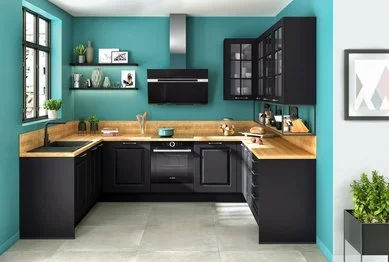
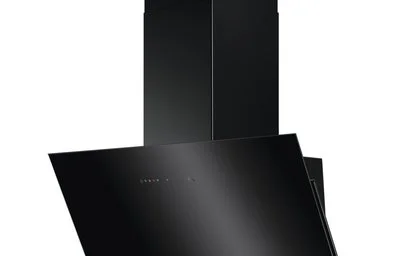
Attached directly to the wall above the hob, decorative hoods do not require a kitchen unit. Available in stainless steel, glass or a combination of the two, they match your cupboard fronts, your oven or your hob.
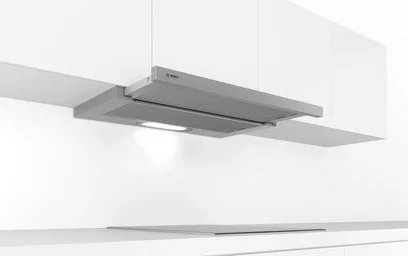
This fits into a wall unit and is activated by pulling it out.
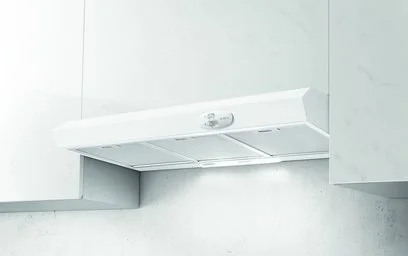
This has a tilting glass visor and can be placed beneath a wall unit. It is the cheapest cooker hood.
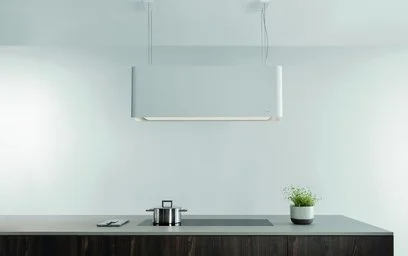
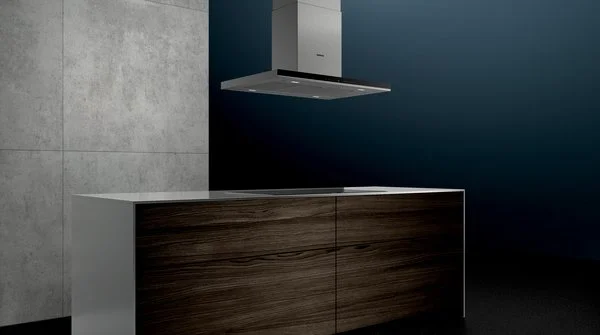
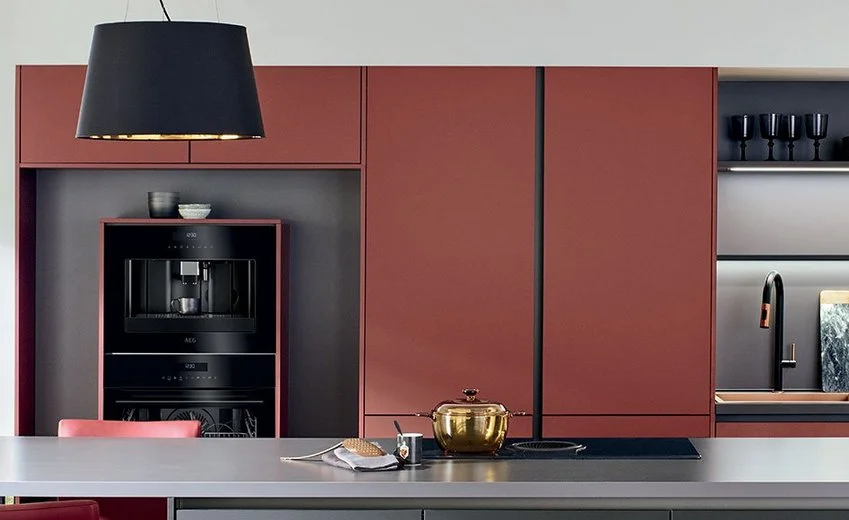
This is fixed to the ceiling above a central kitchen island with a hob. Sometimes cylindrical, sometimes shaped like a chandelier, an island hood acts as a decorative element.
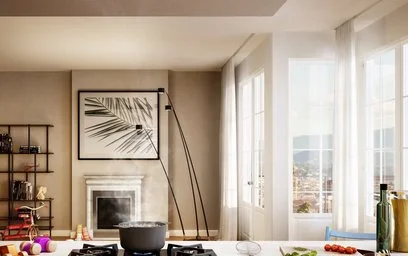
Directly recessed into the ceiling or in its own box, it will be efficient and discreet. This type of installation creates a clear view over the central island.
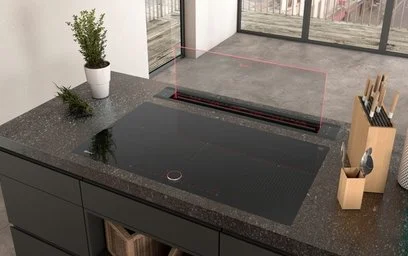
Do you want discretion? Some hoods fit into a specific unit under the worktop or are directly integrated into the middle of an induction hob.
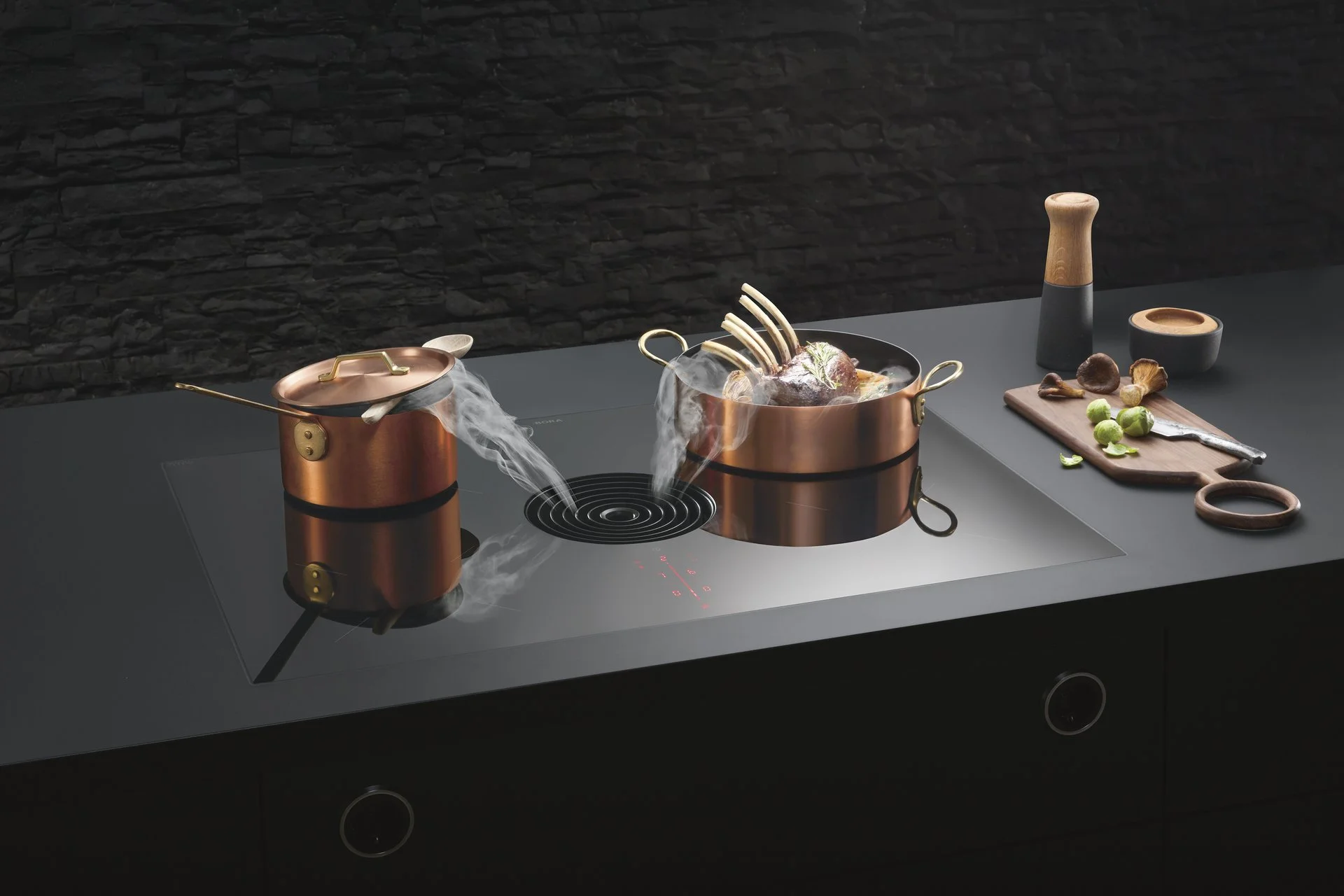
These hoods are equipped with an evacuation mode to remove kitchen odours, humidity and fumes. They draw in air from the room and expel it outside. Grease, meanwhile, is trapped in the filters.
Advantage and disadvantage
+ Most efficient system and permanent filters.
– Obligation to have an external air duct fitted in your home.
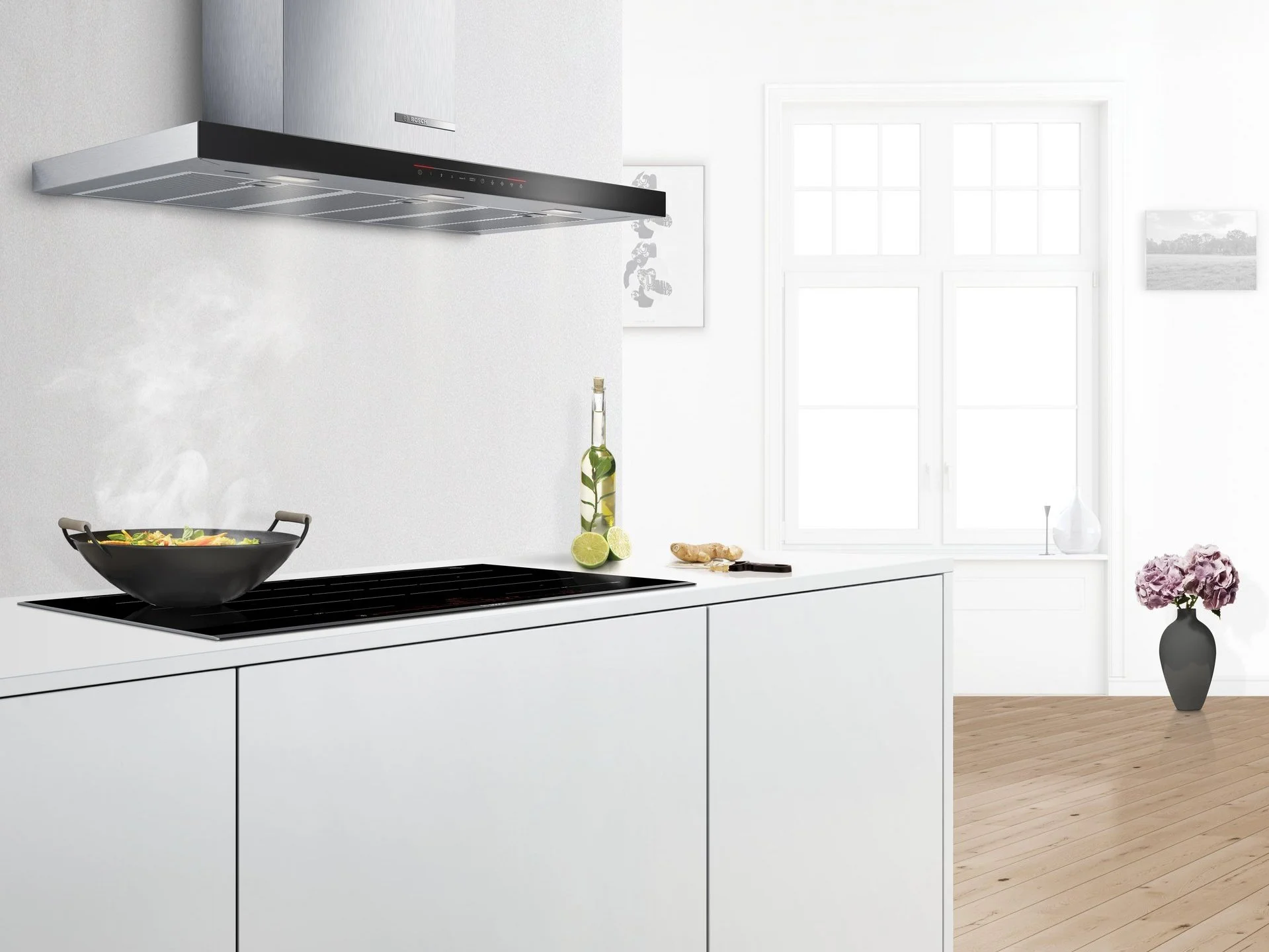
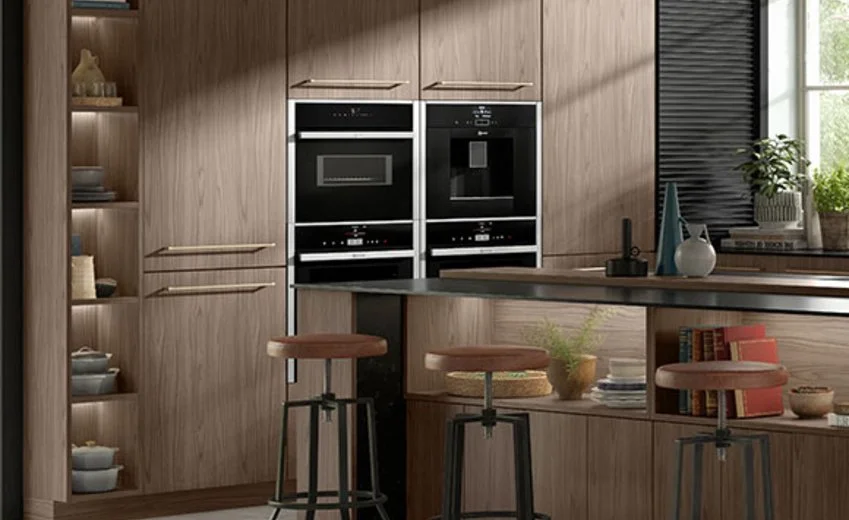
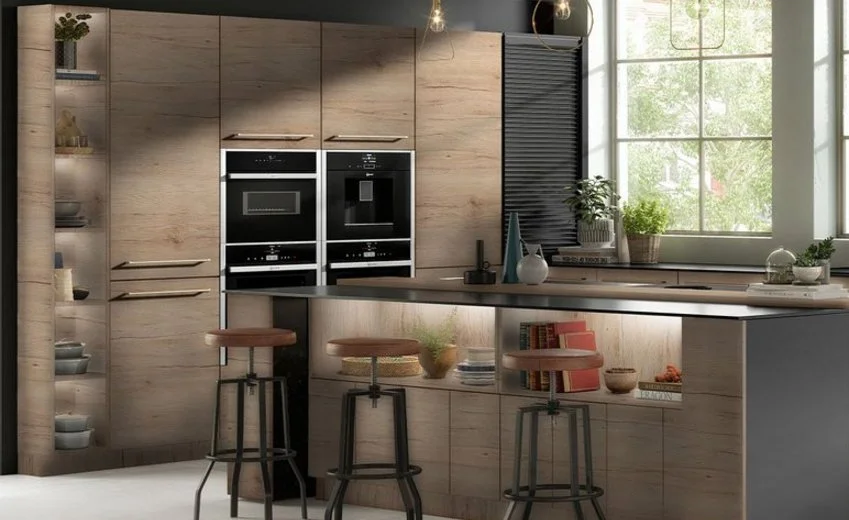

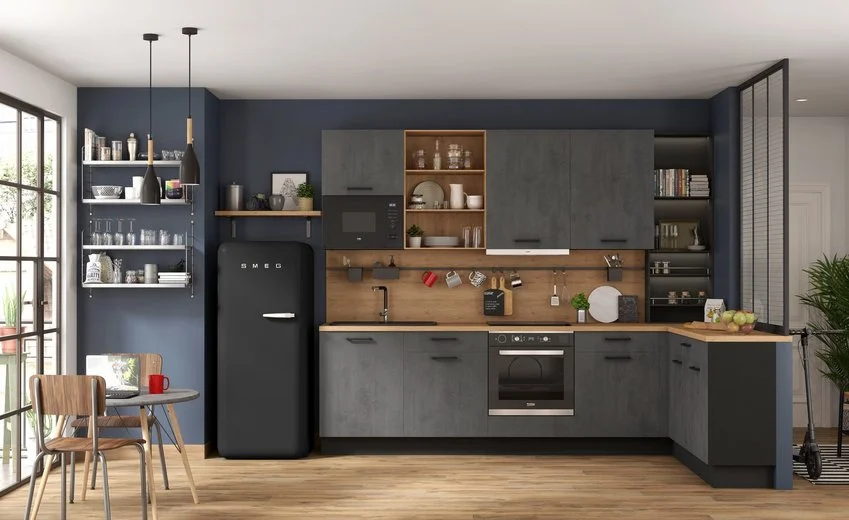
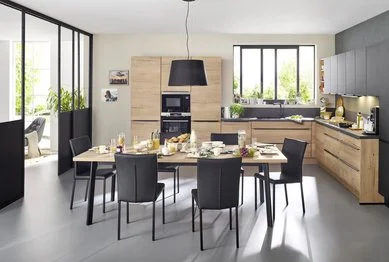
A kitchen in dark grey and light wood: a contemporary and sophisticated look
Reach the article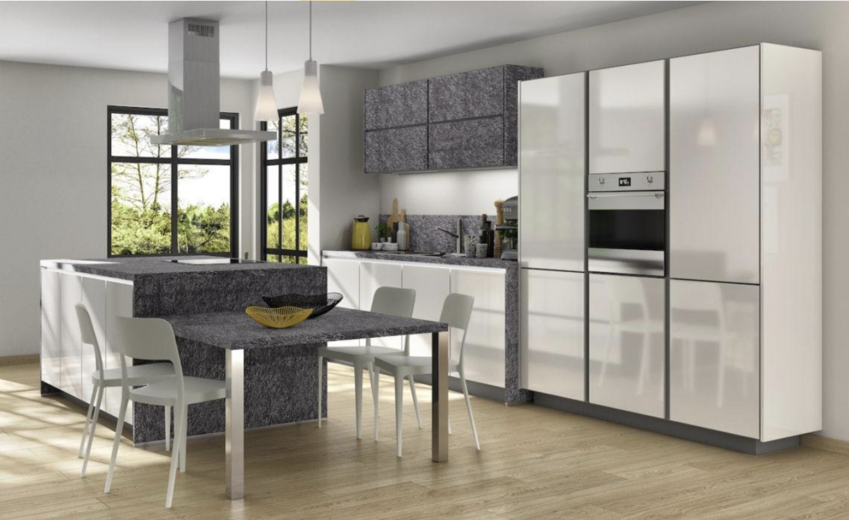
Our other equipments